Room fit
What ceiling height does a golf simulator need?
There is no industry figure, and that is the finding rather than an evasion. Golf Sim Oracle tracks the published room requirements of 24 launch monitors from 12 manufacturers: nine publish a minimum ceiling height, 17 publish at least one room measurement of some kind, and seven publish nothing about the room at all. Ceiling height is the number buyers ask for first and the one makers skip most often, which leaves the most common reason a basement build fails as a judgement call rather than a number.
9/24
publish a minimum ceiling height for the unit itself
17/24
publish at least one room measurement of any kind: a ceiling, a width or a length
7/24
publish no room measurement whatsoever
12
manufacturers tracked, so the absence is a market finding rather than a catalogue one
Minimum ceiling height, by model
Quoted rather than summarised, because the wording carries the caveat. SkyTrak says 10 feet "typically offers ample clearance for most golfers, however many golfers say that 9' is enough", which is a range and a hedge rather than a threshold. An empty cell means the maker publishes no figure; it does not mean the unit needs no headroom.
| Launch monitor | Ceiling height the maker publishes | Where the unit sits |
|---|---|---|
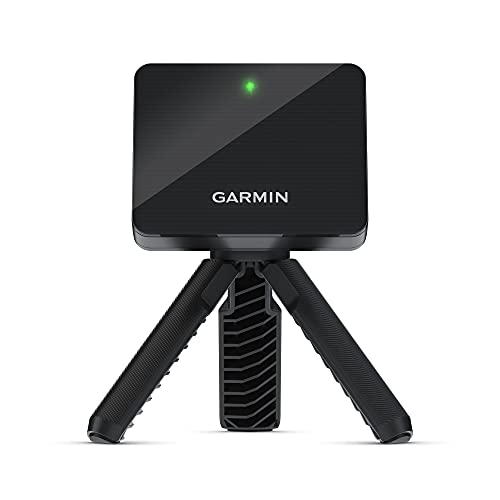 Garmin Approach R10Garmin Garmin Approach R10Garmin | Your space must be at least 8 feet high, stated as a minimum requirement rather than a recommendation | Place the launch monitor on the ground between 6 ft. and 8 ft. (1.8 m and 2.4 m) behind the tee location |
 Garmin Approach R50Garmin Garmin Approach R50Garmin | Ceiling height of 9 feet or more, recommended for most users rather than stated as a minimum | Place the launch monitor approximately 1.5 ft. (0.5 m) to the side of the desired tee location |
 SkyTrak ST MAXSkyTrak SkyTrak ST MAXSkyTrak | 10’ "typically offers ample clearance for most golfers, however many golfers say that 9’ is enough" | Sits next to the ball. SkyTrak contrasts this with "other launch monitors that require up to 8’ behind the hitting area" |
| ProTee VXProTee United · not sold here | Optimal floor-to-ceiling height of 10’ / 300cm. ProTee separately publishes what happens below that, down to 8’4" | Ceiling-mounted, between 9 ft and 10 ft high |
| TrackMan 4TrackMan · not sold here | 3.0 m / 10 ft + | Behind the ball. TrackMan contrasts it with the iO, which removes the space a radar unit needs behind the player |
| TrackMan iOTrackMan · not sold here | 3.0 m / 10 ft + | Ceiling-mounted. TrackMan states there are "no minimum distance requirements in front of or behind the ball" |
| Uneekor EYE XOUneekor · not sold here | 10 ft minimum recommended | Front-mounted overhead on the ceiling in front of the golfer |
| Uneekor EYE XO2Uneekor · not sold here | 10 ft minimum recommended | Front-mounted overhead on the ceiling in front of the golfer, which Uneekor states "keeps the unit completely out of the hitting zone" |
| Uneekor EYE XRUneekor · not sold here | 10 ft minimum recommended | Rear-mounted on the ceiling behind the golfer |
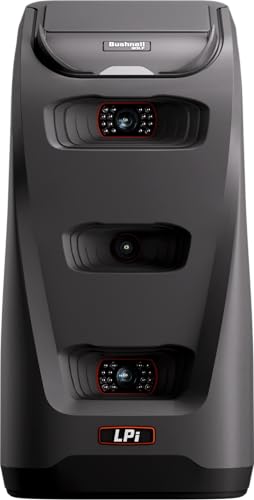 Bushnell Launch Pro iBushnell Bushnell Launch Pro iBushnell | Not published | Not published |
 Rapsodo MLM2PRORapsodo Rapsodo MLM2PRORapsodo | Not published | Sits 6.5 to 8.5 feet directly behind the ball, aimed down the target line |
 Swing Caddie SC200 PlusVoice Caddie Swing Caddie SC200 PlusVoice Caddie | Not published | 5 ft behind the ball, on the same level as the ball |
 FlightScope Mevo Gen2FlightScope · not sold here FlightScope Mevo Gen2FlightScope · not sold here | Not published | Behind the ball |
| FlightScope Mevo+FlightScope · not sold here | Not published | Behind the ball |
 FlightScope X3FlightScope · not sold here FlightScope X3FlightScope · not sold here | Not published | Behind the ball |
 Foresight GC3Foresight Sports · not sold here Foresight GC3Foresight Sports · not sold here | Not published | Not published |
| Foresight GCHawkForesight Sports · not sold here | Not published | Ceiling-mounted four-camera system |
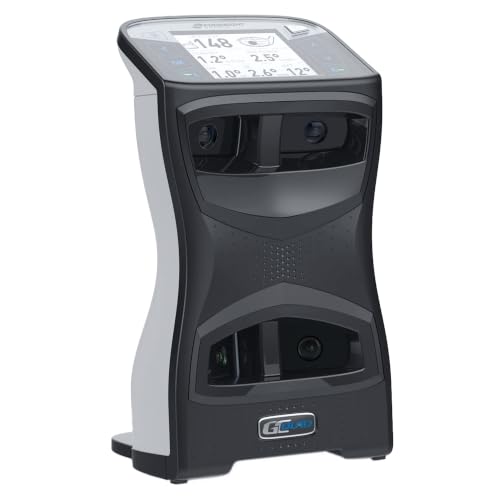 Foresight GCQuadForesight Sports · not sold here Foresight GCQuadForesight Sports · not sold here | Not published | Portable, sits on the floor beside the ball |
 Full Swing KITFull Swing · not sold here Full Swing KITFull Swing · not sold here | Not published | Behind the ball |
| SQUARE Golf Home EditionSQUARE · not sold here | Not published | Not published |
 Uneekor EYE MINIUneekor · not sold here Uneekor EYE MINIUneekor · not sold here | Not published | Portable, sits on the floor beside the ball rather than on the ceiling |
 Uneekor EYE MINI LITEUneekor · not sold here Uneekor EYE MINI LITEUneekor · not sold here | Not published | Portable, sits on the floor beside the ball rather than on the ceiling |
 Voice Caddie Swing Caddie SC300iVoice Caddie · not sold here Voice Caddie Swing Caddie SC300iVoice Caddie · not sold here | Not published | Behind the ball |
| Voice Caddie Swing Caddie SC4 ProVoice Caddie · not sold here | Not published | Behind the ball |
Launch monitors that fit a home bay
The launch monitors Amazon places highest in their category right now. The ceiling figures above come from the makers, not from Amazon.
We may earn a commission from these links, at no extra cost to you.

Rapsodo
Rapsodo Mobile Launch Monitor Golf Simulator
#10 in its Amazon category
$200
Check price on AmazonImage: Amazon

PRGR
PRGR HS 130-A Portable Golf Launch Monitor
#21 in its Amazon category
$200$230Save $30
Check price on AmazonImage: Amazon
Garmin
Garmin Approach R10
#27 in its Amazon category
$479
Check price on AmazonImage: Amazon
Rapsodo
Rapsodo MLM2PRO Mobile Launch Monitor Golf Simulator
#31 in its Amazon category
$600$700Save $100
Check price on AmazonImage: Amazon
What happens below the recommended ceiling
Almost every maker prints a floor and stops, which leaves "I have 8ft 6, am I out?" unanswered. One maker publish what actually degrades, and at which height.
ProTee United ProTee VX
- : The optimal height for the VX from floor (hitting surface) to ceiling
- : Lower than recommended, but ProTee "did not find any issues" and received no negative feedback from users at this height
- : Low, but works. High speed shots will require a ball like the TP5 so correct spin values are detected
- : Too low, not recommended. Besides potential detection issues there is a slight chance the unit is hit with a wedge on an upwards swing
Use these figures
The whole table, every maker’s own wording, with the date each page was read. Published under CC BY 4.0, so it can be reused anywhere that credits Golf Sim Oracle.
Measure to the lowest obstruction
A ceiling figure is a swing-clearance figure, so it is measured to the lowest thing above the hitting area rather than to the ceiling itself. A joist, a light, a garage door track or a duct is the real number. This is the most common reason a room that measures tall enough on paper still catches a driver.