What launch monitor makers actually publish about your room
Ceiling height, room depth and where the unit has to sit, taken from each manufacturer’s own manual and dated. Golf Sim Oracle tracks the published space requirement for every launch monitor it covers.
HomeVerdict
Of the 6 launch monitors covered here, only 1 has a manufacturer-published minimum ceiling height. Every other maker tells you to ensure "adequate" clearance and leaves you to guess the number.
That gap is the reason this page exists. Ceiling height is the first thing that rules a room in or out, it is the hardest thing to change after you have bought, and it is the one figure the industry declines to print. What the manuals do publish is where the device sits and how far the ball must be from the net, and those two numbers added together are what actually decides whether your garage works.
Published space requirements, by model
Every figure below is quoted from the manufacturer’s own page or manual. Sources and the date each was read are on the individual model pages. We have not tested any of these.
| Model | Ceiling height | Where the unit sits | Ball to net or screen | Room depth | Price |
|---|---|---|---|---|---|
 Garmin Approach R50Camera-based unit with a built-in touchscreen Garmin Approach R50Camera-based unit with a built-in touchscreen | Not published | Place the launch monitor approximately 1.5 ft. (0.5 m) to the side of the desired tee location | Not published | Not published | $5,000 |
 SkyTrak ST MAXPhotometric camera unit that sits beside the ball SkyTrak ST MAXPhotometric camera unit that sits beside the ball | 10’ "typically offers ample clearance for most golfers, however many golfers say that 9’ is enough" | Sits next to the ball. SkyTrak contrasts this with "other launch monitors that require up to 8’ behind the hitting area" | Not published | 17’ "offers a comfortable and spacious setting" | $1,995 |
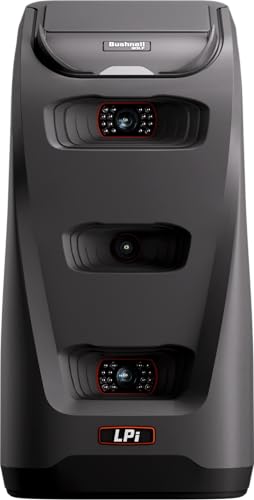 Bushnell Launch Pro iPhotometric camera unit Bushnell Launch Pro iPhotometric camera unit | Not published | Not published | Not published | 13 feet of depth to track ball flight | $1,500 |
 Rapsodo MLM2PRODual optical cameras plus Doppler radar Rapsodo MLM2PRODual optical cameras plus Doppler radar | Not published | Sits 6.5 to 8.5 feet directly behind the ball, aimed down the target line | 8 feet from ball to the net | A little more than 14 total feet | $600 |
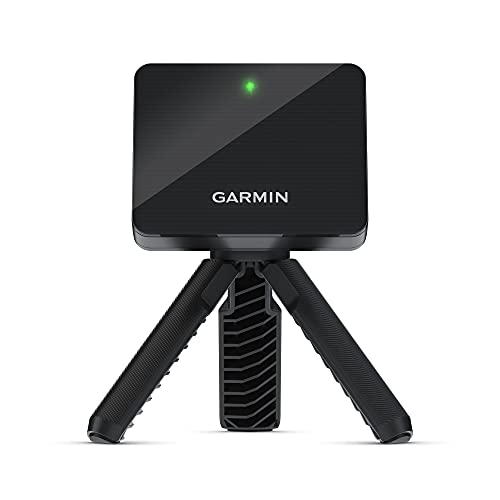 Garmin Approach R10Doppler radar Garmin Approach R10Doppler radar | Not published | Place the launch monitor on the ground between 6 ft. and 8 ft. (1.8 m and 2.4 m) behind the tee location | The tee location must be at least 8 ft. (2.4 m) away from the net when playing indoors | Not published | $408 |
 Voice Caddie Swing Caddie SC200 PlusDoppler radar Voice Caddie Swing Caddie SC200 PlusDoppler radar | Not published | 5 ft behind the ball, on the same level as the ball | Not published | Not published | $150 |
Why radar and camera units need different rooms
A Doppler radar unit reads the ball as it travels away from it, so it has to sit behind you. Garmin puts the Approach R10 between 6 and 8 feet behind the tee, then asks for a further 8 feet from tee to net. Add those and a 12-foot garage fails before you have chosen a mat.
A camera unit photographs the ball at impact, so it sits beside it. SkyTrak makes the comparison itself, noting its unit sits next to the ball where others need up to 8 feet behind the hitting area. If your room is short, that difference matters more than any accuracy claim on either box.
Measure before you shortlist
Depth first, then ceiling, then width. A model that fits your budget and not your room is not a compromise, it is a return. Take a driver into the space and make a full swing before you read another spec sheet.
Work out what fits your room