Head to head
SkyTrak ST MAX vs Swing Caddie SC200 Plus
What SkyTrak and Voice Caddie each publish, side by side, read from their own pages on 2026-08-18. This page compares documentation rather than performance: we have swung neither unit.
Every comparison
$3,495
SkyTrak ST MAX, five years
$237.99
Swing Caddie SC200 Plus, five years
7 of 8
SkyTrak publishes
2 of 8
Voice Caddie publishes
The SkyTrak ST MAX and the Swing Caddie SC200 Plus compared in one paragraphWritten to be quoted whole, including what neither maker publishes
Golf Sim Oracle compares the SkyTrak ST MAX and the Swing Caddie SC200 Plus on what SkyTrak and Voice Caddie each publish, not on how either performs. The SkyTrak ST MAX is $1,995 and the Swing Caddie SC200 Plus is $237.99. Counting the cheapest software that plays courses, five years of the SkyTrak ST MAX comes to $3,494.95 against $237.99 for the Swing Caddie SC200 Plus, which is the comparison the price tags do not make. Of the 8 specifications this page checks, SkyTrak publishes 7 for the SkyTrak ST MAX and Voice Caddie publishes 2 for the Swing Caddie SC200 Plus. SkyTrak documents its unit more completely, which is a fact about the two companies rather than about the two products, and it is the difference a buyer feels first: the Swing Caddie SC200 Plus leaves you to find out. Every figure was read from the manufacturers' own pages on 2026-08-18. Retailer listings were not used, even where a shop publishes a number a maker omits. Golf Sim Oracle has never swung a club in front of either unit and does not claim to have tested them.
What each maker publishes
A row reading “not published” is the manufacturer’s silence, not a gap in our research. Nothing here is filled in from a retailer listing.
| Specification | SkyTrak ST MAX | Swing Caddie SC200 Plus |
|---|---|---|
| Tracking technology | Photometric camera unit that sits beside the ball | Doppler radar, K band 24 GHz, placed behind the ball |
| Minimum ceiling height | 10’ "typically offers ample clearance for most golfers, however many golfers say that 9’ is enough" | Not published by Voice Caddie |
| Room depth | Minimum 12 feet long, on SkyTrak’s support site; the sales site separately suggests 17’ as a depth that "offers a comfortable and spacious setting" | Not published by Voice Caddie |
| Room width | Minimum 10 feet wide, on SkyTrak’s support site; the sales site separately suggests 12’ "for a more spacious feel", plus 1’ to 2’ for both-handed play | Not published by Voice Caddie |
| Where the unit sits | Sits next to the ball. SkyTrak contrasts this with "other launch monitors that require up to 8’ behind the hitting area" | 5 ft behind the ball, on the same level as the ball |
| Distance to the screen | Not published by SkyTrak | Not published by Voice Caddie |
| Subscription | $99.99 a year, cheapest tier | Not published by Voice Caddie |
| Accuracy the maker claims | Club data "Within 1.5 degrees of Trackman" and ball data "Within 2 yards of Trackman", both attributed by SkyTrak to third-party testing by GolfBays rather than to an absolute tolerance | Not published by Voice Caddie |
| Five years, software included | $3,494.95 | $237.99 |
Where these figures came from6 pages on the makers’ own sites, read 2026-08-18
Golf Sim Oracle has swung a club in front of neither of these units. The authority of this page is its sourcing: every figure above is quoted from SkyTrak’s or Voice Caddie’s own pages, with the date it was read. Comparison blogs and retailer listings were not used, even where a shop publishes a figure a maker omits.
- SkyTrak: Plan Your Space
- SkyTrak: Membership tiers and pricing
- SkyTrak: Hitting Bay Requirements
- SkyTrak: SkyTrak ST MAX Launch Monitor, specifications
- SkyTrak: SkyTrak Technology
- Voice Caddie: Swing Caddie SC200 Plus
Launch monitors you can buy today
Both of these have their own page with live pricing. These are the alternatives across the range.
We may earn a commission from these links, at no extra cost to you.

Rapsodo
Rapsodo Mobile Launch Monitor Golf Simulator
#8 in its Amazon category
$200
Check price on AmazonImage: Amazon

PRGR
PRGR HS 130-A Portable Golf Launch Monitor
#21 in its Amazon category
$200$230Save $30
Check price on AmazonImage: Amazon
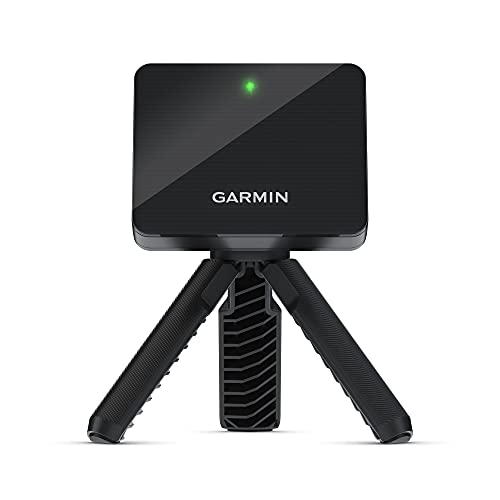
Garmin
Garmin Approach R10
#30 in its Amazon category
$479
Check price on AmazonImage: Amazon

Voice Caddie
Voice Caddie SC200Plus Portable Golf Launch Monitor and Swing Analyzer
#48 in its Amazon category
$238
Check price on AmazonImage: Amazon